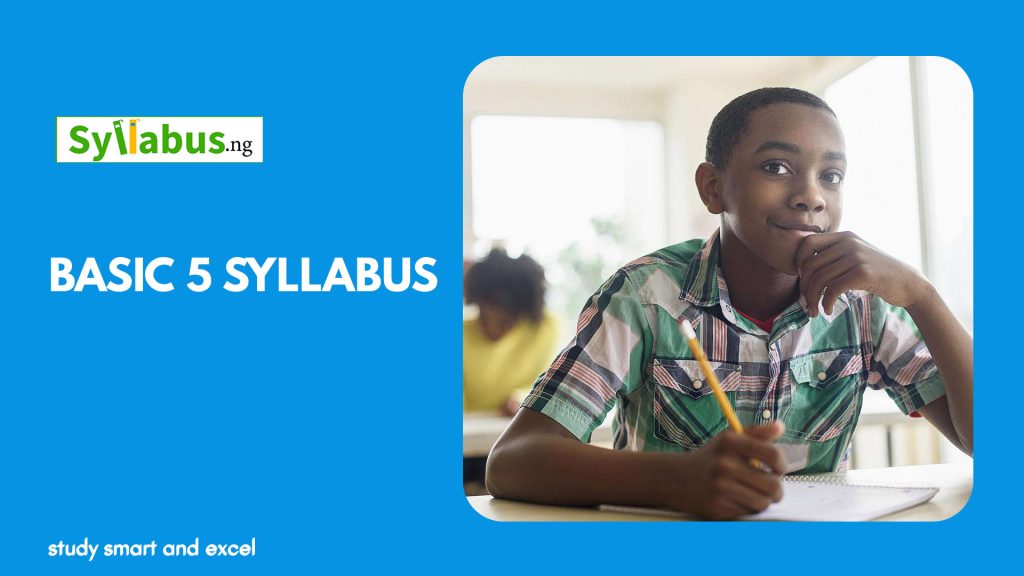
About Civic Education Scheme of Work for Primary 5
Civic Education is a subject that is designed to educate the pupils on their rights, duties and responsibility as members of a community and the basics of how the government works.
Civic Education for Basic 5 covers topics that focus on values, government and leadership and its qualities. Some of the topics covered in this class include; Loyalty, loyalty in relationships and its examples, importance of loyalty, National service that shows loyalty, meaning of leadership, qualities of a good leader, leadership functions, leadership style, government etc.
The educator should ensure that when teaching the pupils examples that are given are something they can relate with, and the pupils should also be encouraged to cite their own examples and apply what they are taught in their everyday lives.
Download Primary 5 Civic Education Scheme of Work
Know what’s expected of you as an educator
Download the Lagos State Unified Scheme of Work for Primary 5 Civic Education
Primary 5 First Term Scheme of Work for Civic Education
LAGOS STATE GOVERNMENT MINISTRY OF EDUCATION UNIFIED SCHEMES OF WORK FOR PRIMARY SCHOOLS
Civic Education Scheme of Work for Primary/Basic 5
CLASS
Primary/Basic 5
SUBJECT
Civic Education
TERM
First Term
WEEK
TOPICS
Learning Objectives
1
Readiness test/ Loyalty -Meaning of Loyalty – evidence of loyalty
By the end of the lesson pupils should be able to: i. Describe loyalty and show evidence of loyalty to family, school and the society as a whole ii. Discuss the consequences of disloyalty iii. Identify national services that shows loyalty
2
Loyalty in relationships and its examples
By the end of the lesson pupils should be able to: i. demonstrate how to show loyalty to friends and famlies ii. compare examples of loyal individuals they know
3
-Importance of loyalty -Consequences of disloyalty
By the end of the lesson pupils should be able to: i. Explain the meaning of disloyalty ii. Analyze and explain the importance of loyalty iii. Discuss the consequences of disloyalty
4
National service that shows loyalty
By the end of the lesson pupils should be able to: i. suggest loyal services that can be rendered to the family ii. demonstrate loyal services that can be rendered to the school iii. identify the services that requires loyalty to the nation
5
– meaning of leadership – types of leadership
By the end of the lesson pupils should be able to: i. explain the term leadership ii. identify who a leader is iii. mention the types of leadership iv. analyze the types of leadership
6
qualities of a good leader
By the end of the lesson pupils should be able to: i. identify qualities of a good leader; ii. describe the qualities of a good leader; iii. highlight examples of a good leader;
7
MID TERM BREAK
8
Leadership functions
By the end of the lesson pupils should be able to: i. Highlight different function of a leader ii. Explain the different levels of leadership i.e. religious and political leader iii. Discuss their roles
9
Leadership styles e.g democracy, dictatorship and liesserfaire
By the end of the lesson pupils should be able to: i. identify leadership style ii. discuss leadership styles iii. give examples of leadership styles
10
REVISION
11
REVISION
12-13
REVISION/EXAMINATION
Primary 5 Second Term Scheme of Work for Civic Education
CLASS
Primary/Basic 5
SUBJECT
Civic Education
TERM
Second Term
WEEK
TOPICS
Learning Objectives
1
Revision/Characteristics of a bad leader
By the end of tho lesson pupils should be ablo to: i. Identify characteristics of a bad leader ii. Discuss tho characteristics of a bad leader problems that may arise from bad leadership
2
Definition and meaning of govemment
By the end of the lesson pupils should be able to: i. Define government ii. Explain the meaning of government iii. Identify the form of government practiced in Nigeria
3
arms of government
By the end of the Esson pupils should be able to: i. identify the three arms of government executive, legislative and judiciary ii. explain the arms of government iii. mention the head of each arm of government
4
functions of the arms of government
By the end of the lesson pupils should be able to: i. mention some of the functions performed by the arms of government ii. explain functions of each of the arms of government
5
Importance of the arms of Government
By the end of the lesson, pupils should be able to i. list importance of each arms of government ii. discuss the importance of each arms of government
6
Difference between the arms of government
By the end of the lesson, pupils should be able to i. differentiate between legislative, executive and judiciary
7
MID TERM BREAK
8
Pressure groups -meaning of pressure group and types of pressure group
By the end of the lesson pupils should be able to: i. explain the meaning of pressure groups ii. highlight the type of pressure groups iii. mention pressure groups in the country
9
REVISION
10
Revision
11
REVISION
12-13
REVISION/EXAMINATION
Primary 5 Third Term Scheme of Work for Civic Education
CLASS
Primary/Basic 5
SUBJECT
Civic Education
TERM
Third Term
WEEK
TOPICS
Learning Objectives
1
Resumption test
2
Advantages and disadvantages of pressure group
By the end ofthe lesson pupils should be able to: i. Identify the advantages of pressure groups ii. Mention the disadvantages of pressure groups
3
Meaning and definition of values
By the end of the lesson pupils should be able to: i. Explain value mention the types of value ii. discuss the types of value
4
Values that promotes peace
By the end of the lesson pupils should be able to: i. Explain the values that promotes peace ii. Identify values that promotes peace iii. Discuss the values that promotes peace
5
-concept of social injustice
By the end of the lesson pupils should be able to: i. define what social injustice is
6
Social injustice continues
By the end of the lesson pupils should be able to: i. Give examples of social injustice ii. Explain the examples of social injustice
7
MID-TERM BREAK
8
Types of social injustice
By the end of the lesson pupils should be able to: i. Identify the types of social injustice ii. Discuss the types of social on justice
9
How to communicate social injustice
By the end of the lesson pupils should be able to: i. Identify how to communicate social injustice ii. discuss how to communicate social injustice